
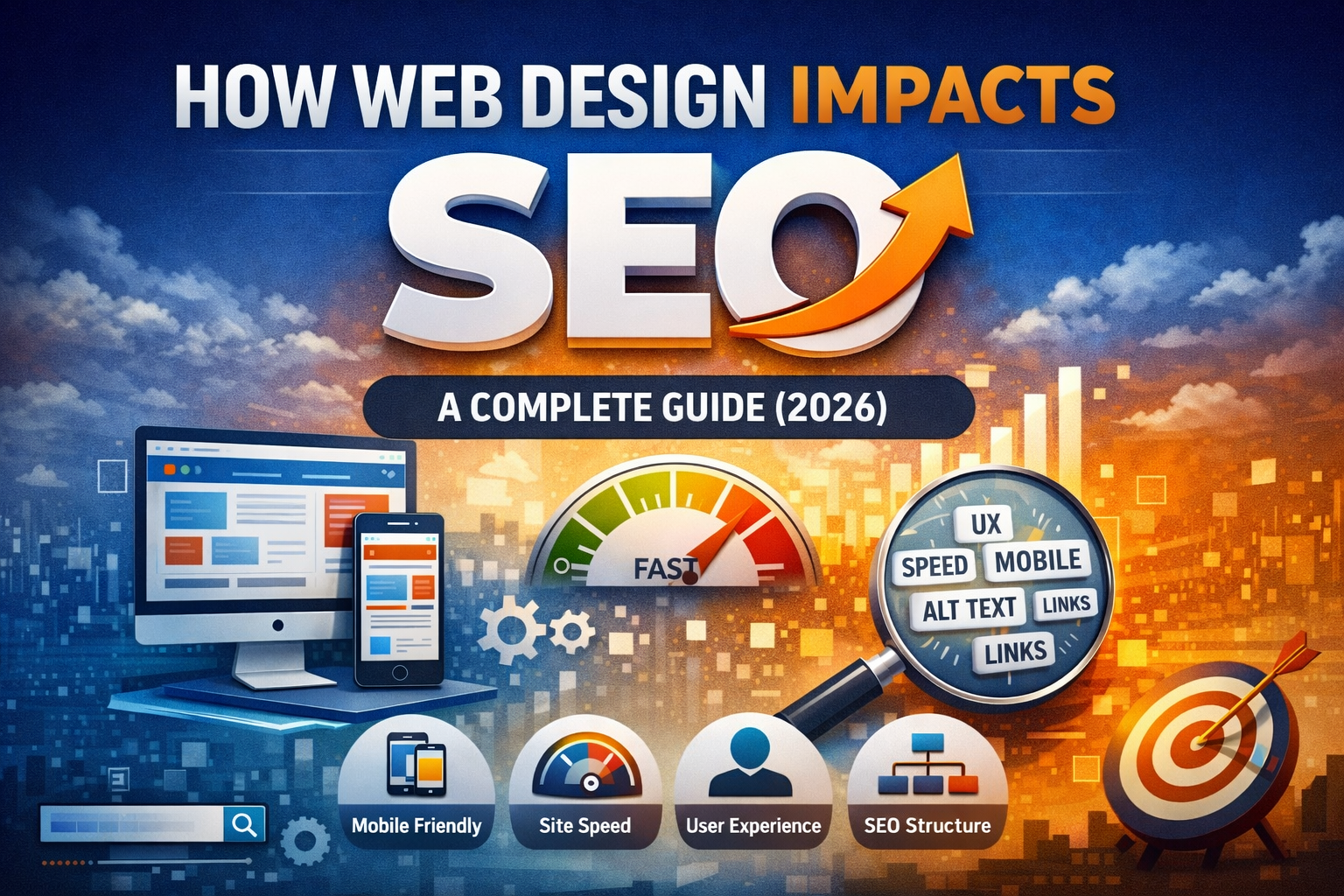
Many businesses believe SEO is only about keywords and backlinks. In reality, web design plays a major role in SEO performance. A poorly designed website can hurt rankings, increase bounce rate, and reduce conversions—even with good content.
In this guide, we explain how web design directly affects SEO and how businesses in Kochi can optimize their websites for better Google rankings in 2026.
1. Mobile-Friendly Design Is Mandatory
Google follows mobile-first indexing, meaning it ranks your website based on its mobile version.
Best practices:
- Responsive design for all screen sizes
- Easy navigation on mobile
- Readable fonts without zooming
A mobile-friendly website improves user experience and search rankings.
2. Website Speed & Performance
Slow websites lose visitors and rankings.
How design affects speed:
- Heavy images without compression
- Poorly coded themes
- Too many animations
SEO tip:
Use optimized images, clean HTML/CSS, and caching plugins to keep load time under 3 seconds.
3. User Experience (UX) & Bounce Rate
Good UX keeps users engaged longer. Google tracks:
- Time spent on site
- Pages per session
- Bounce rate
Good UX design includes:
- Clear layout
- Simple navigation
- Easy-to-find CTAs
Better UX = better SEO signals.
4. SEO-Friendly Website Structure
Search engines must understand your site.
Design best practices:
- Proper heading hierarchy (H1 → H2 → H3)
- Clean URLs
- Logical page structure
This helps Google crawl and index your website efficiently.
5. Image Optimization
Images improve engagement but can hurt SEO if not optimized.
Do this:
- Compress images
- Use descriptive file names
- Add ALT text with keywords
Example ALT text:
“web design company in Kochi homepage”
Conclusion
SEO and web design go hand in hand. A fast, mobile-friendly, well-structured website improves rankings and conversions.
If your website looks good but doesn’t rank, it’s time to align design with SEO strategy.
Comments are closed